
Introduction
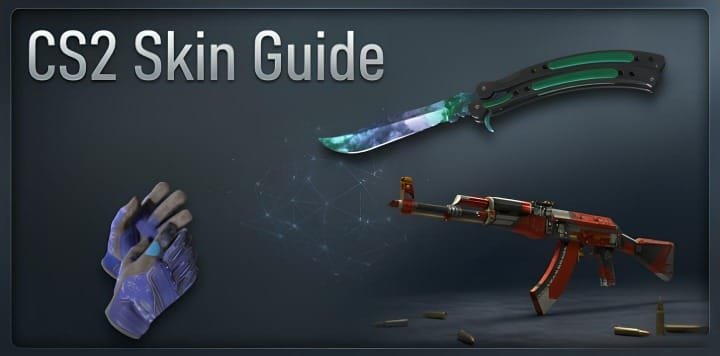
If you’ve ever played Counter-Strike 2, (CS2) you’ve probably noticed players carrying beautifully designed weapons like colorful rifles, shiny knives, and patterned pistols. These are called skins, and they’ve become an important part of the CS2 community.
What makes skins even more interesting is their price range. Some skins are available for just a few rupees, while others cost lakhs. For new players, this system can be confusing at first. But once you understand it, not only does it make the game more enjoyable, but also helps you avoid making expensive mistakes.
In this guide, we’ll take a closer look at CS2 skins, including what they are, how they work, how their prices depend, and much more. So, let’s get started.
What Are CS2 Skins?
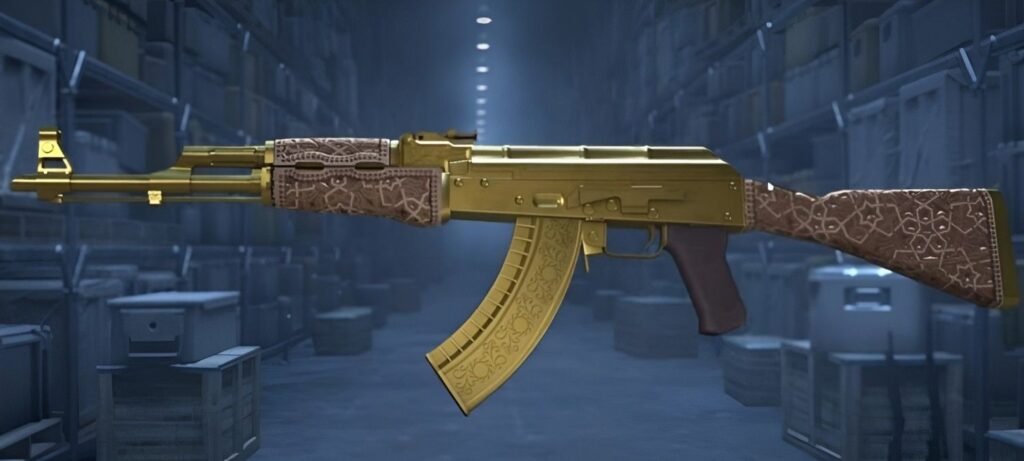
CS2 Skins are virtual clothing or textures that change the look of your weapon. Applying skins does not affect your gameplay nor increase the gun’s power, damage, or accuracy. Whether you equip a skin worth ₹10 or ₹10 lakh, the gun will perform the same as before. Skins are only cosmetic, it only enhance the weapon’s visual appearance.
Skins were introduced in 2013 through the “Arms Deal” update. Since then, Valve has released thousands of skins for almost every weapon in the game, from the AK-47 and AWP to knives and gloves.
There are different types of skins; some are very bright and colorful, while others look exactly like real army camouflage.
The best part about CS2 skins you can not only use them in the game, but also trade them with other players, and even sell them for real money.
Types of CS2 Skins.
CS2 skin types are divided by weapon category. Each weapon has its own unique skin, which makes CS2 so diverse.
Here are those skin types:
1. Weapon Skin
Weapon skins are the most basic and popular category in CS2. These are cosmetic items that change the look of your gun.
Each weapon has its own design and style based on different collections. Players use these skins frequently during matches.
2. Knife Skins
Knife skins are the most expensive and high-demand skins in CS2. They change not only the knife’s colour but also its design and shape.
Knife skins are extremely rare, which is why they often come with high prices. Because of their rarity and prestige, many players use them as a status symbol in the game.
3. Glove Skins
Glove skins change the look of your character’s hands. They come in various designs, such as Sport, Moto, and Specialist.
These skins are very rare and costly, giving your loadout a premium feel. These skins are considered as a high-value items.
4. Agent Skins
Agent skins in CS2 are cosmetic items that completely change the appearance of your in-game character. Agent skins allow you to give your character new outfits and unique styles.
Agent skins aren’t just about appearance; in many cases, they also offer new uniforms, distinctive voices, and sometimes even unique animations.
5. Souvenir Skins
Souvenir skins are one of the most unique and rare categories in CS2. These skins are only available when Valve organizes a Major Tournament in Counter-Strike 2. Its special feature is the gold stickers, which represent the tournament they come from.
You don’t get these skins through regular cases or weekly drops. To get them, you have to collect Souvenir Packages during tournaments, which are usually obtained through Viewer Pass or tokens.
Why Are CS2 Skins So Popular?
The reason CS2 skins are so popular is not just about gaming; they’re part of a larger digital economy and player psychology.
There are four main reasons behind their popularity:
1. Status Symbol and Flexing
Counter-Strike 2 (CS2) is a competitive game where thousands of people watch you play. When you have a rare knife or gun skin, you stand out in the game’s lobby. Over time, showing off rare skins has become a status symbol among players. It’s just like wearing an expensive watch or driving a luxury car in real life.
2. Investment and Trading
Skins are no longer just part of the game; they’re now valuable digital assets. In CS2, some skins that were priced at ₹5,000 4-5 years ago are now worth ₹50,000 or more. Players can earn real cash by selling these skins either in-game or on third-party sites. This is why many refer to it as the “Stock Market for Gamers.
3. Personalization
Every player wants their weapon to reflect their personal style. Some prefer a realistic military look, while others go for anime or futuristic designs. Skins make this possible by helping you create your own identity in the game. When a player applies stickers to their skin, it gradually creates a personal attachment. Over time, that skin becomes more than just an item; it turns into a reflection of the player’s choices and creativity.
4. The Gambling & Hype
The most popular way to get skins is through case opening, and it’s highly exciting. In Counter-Strike 2, the thrill of opening a ₹200 case and landing a ₹50,000 knife keeps players coming back. This hype grows even more when big YouTubers and streamers open expensive cases, often driving massive demand for certain skins across the community.
CS2 Skins Rarity System Explained
The Rarity of a skin in CS2 is defined by a color-coded ranking system that indicates how rare it is. The rarer the color, the lower the chance of getting the skin and the higher its price.
Understanding the rarity of a skin is very important, as this determines its price. If you understand the rarity system, then you can find better deals and make smart buying and selling decisions.
Skin rarity is divided into eight categories.
1. Consumer Grade (White)
These are the most basic and common skin grades. These are often found in “Weekly Drops” that players get after playing the game for a while. They typically cost between ₹10-₹100, so they’re quite common among new players.
2. Industrial Grade (Light Blue)
This grade is slightly higher than the Industrial grade, but is still quite common. They are often used in “trade-up contracts,” where players combine multiple low-value skins to obtain a single higher-quality skin.
3. Mil-Spec (Dark Blue)
This is where the skin designs start to look more stylish and visually attractive. They also have a high chance of dropping from cases, making them quite common among players.
4. Restricted (Purple)
These skins are quite rare. If you’re opening cases, the chance of finding them is around 15%. Their design and look are also quite unique and eye-catching, making them popular among players.
5. Classified (Pink)
Classified skins are highly rare, which keeps their demand consistently high in the market. They have a 3% chance of being found in a case, they are considered both valuable and premium assets.
6. Covert (Red)
This is the highest tier of gun skins. They are extremely difficult to find, with a drop chance of around 0.64%. This category includes popular and premium skins like the AK-47 Bloodsport and AWP Asimov, known for their unique designs and high value.
7. Exceedingly Rare (Gold)
Only knives and gloves skin fall into this category. These are very difficult to obtain from cases, as their drop chance is less than 0.26%. For this reason, these items are quite rare and can cost anywhere from thousands to millions.
8. Contraband (Orange)
Only one skin falls into this category in the game: the M4A4 Howl. Its design was controversial due to copyright issues, after which Valve removed it from drops. Due to this limited availability, it has become one of the rarest and most expensive skins in CS2.
Skin Float Value & Wear Levels
In Counter-Strike 2, the condition of a skin is called its float value. Each skin has a numeric value between 0.00 and 1.00. This number is called the float value.
The lower the float value (closer to 0.00), the cleaner, fresher, and smoother the skin will appear. The higher the value (closer to 1.00), the more worn the skin will appear.
The most important thing is that a skin’s ‘Float Value’ never changes. It’s a permanent value that remains fixed with the skin.
The float value is divided into five main categories, and a skin’s value is mainly determined by this range.
1. Factory New.
The skins in this category are in the best condition, with no visible scratches or wear. Their float range is 0.00 to 0.07, making the skin appear almost brand-new and factory-fresh.
This is one of the most expensive categories, and collectors especially seek out skins with a float value in this range, as both their demand and market value are quite high.
2. Minimal Wear
Skins in this category have very light scratches that are barely visible during gameplay. Their float range is 0.07-0.15, making these skins look very clean and almost like new. This range is best for players who want a factory-new look, but on a slightly smaller budget.
3. Field-Tested
Skins in this category have visible scratches and wear, making the gun appear slightly older. Its float ranges from 0.15 to 0.38, placing it in the mid-range. This is the best-selling category because it strikes a good balance between price and appearance, not too expensive, not too worn.
4. Well-Worn
Skins in this category are much more worn, with colors fading more quickly. Their floats range from 0.38 to 0.45, indicating noticeable wear. These skins are relatively cheap, and their resale value is also limited due to lower demand.
5. Battle-Scarred
Skins in this tier are the most heavily worn, with visible scratches and faded colours. In some cases, the wear is so extreme that the design is barely visible. The float range for this category is 0.45 to 1.00. Battle-Scarred skins are usually the cheapest, as they are in poor condition and have relatively low demand.
What Determines CS2 Skin Prices?
The price of Counter-Strike 2 skins is determined by several key factors. These factors together decide how valuable a skin is in the trading ecosystem.
1. Supply and Demand:
This is basic economics. If a skin is in high demand but has limited availability, its price increases. Some skins come from discontinued collections like Operation Bravo, where supply is fixed, so their value tends to rise over time.
2. Rarity
As discussed earlier, Covert (Red) and Gold (Knives) skins are extremely rare. Due to their low drop rates, they naturally carry a higher base price in the market.
3. Wear Level & Float Value
A skin’s condition plays a major role in its pricing. A Factory New version of the same skin can cost 5–10 times more than a Battle-Scarred one. Collectors are often willing to pay extra for lower float values.
4. Stickers
Stickers can significantly increase a skin’s value, especially rare ones. For example, stickers from the 2014 Katowice tournament are extremely valuable today, and even a low-tier skin with such stickers can increase its price by 10x or more.
5. Patterns
Most skin patterns are randomly generated, but rare pattern variations can be extremely valuable. For instance, “Blue Gem” skins can sell for $10,000–$50,000 above normal market price. Similarly, Ruby, Sapphire, and Emerald knife patterns are among the most expensive in the game.
6. Major Tournaments and Updates
Major game updates also affect prices. If a weapon is buffed, its skins often increase in value due to higher demand. On the other hand, if a weapon is nerfed, its skin prices can drop.
Overall, these factors make the CS2 skin market dynamic, unpredictable, and highly active.
How Much Do CS2 Skins Cost in 2026?
The market for Counter-Strike 2 skins in 2026 is significantly larger than before. Skin prices can range from a few rupees to millions, depending on rarity and demand.
We can divide the market into four main categories:
1. Budget Skins (₹10 – ₹800)
These skins are ideal for new players who are bored with the default weapon look. They offer an easy, affordable way to add style to your loadout.
This range primarily includes common weapons such as Glocks, USPs, and SMGs. Most Consumer and Industrial-grade skins fall into this category.
Even within ₹500, you can find decent Field-Tested skins that look good while staying budget-friendly.
2. Mid-Range Skins (₹800 – ₹8,000)
Most serious players prefer skins from this range because it offers a strong balance between price and quality.
Here, you can find attractive skins for popular weapons like the AK-47, M4A1-S, and AWP, such as AK-47 Ice Coaled or AWP Atheris.
You also start getting StatTrak (kill counter) skins in this range, which further increases both their value and overall appeal.
3. High-Tier Skins (₹8,000 – ₹80,000)
At this tier, skins are no longer just cosmetic items; they become digital assets with the potential to appreciate in value over time.
This category includes entry-level knives like the Gut Knife and Navaja, as well as gloves and rare Covert (Red) skins. Many players see these items not only as in-game cosmetics but also as long-term investment opportunities.
4. Luxury “Grail” Skins (₹80,000 – ₹1 Crore+)
These skins are considered the “Ferrari” of the Counter-Strike 2 world. They are extremely rare, premium, and highly desirable. This tier includes iconic skins like the Karambit Doppler, Butterfly Knife, and the legendary AWP Dragon Lore.
Some skins have ultra-rare patterns, such as the “Blue Gem,” which covers the knife in a rare blue colour and has even crossed ₹1 crore in value by 2026. These skins are mostly owned by collectors and professional players, making them out of reach for the average player.
How to Get CS2 Skins?
There are several ways to obtain skins in Counter-Strike 2. Some methods require spending money, while others are completely free. Here are the most common and safe ways every player can use:
1. Weekly Care Package
Valve introduced the Weekly Care Package in 2023. As you play the game and gain XP levels, you receive a selection of four items each week. From these, you can choose any two of them, which usually include a case and a weapon skin.
To access this feature, you must have Prime Status. It’s one of the simplest and free ways to earn skins over time.
2. Opening Cases
As discussed earlier, one way to get skins is to open cases and hope for the best. This requires a case and a key, which costs around ₹210. Each case opening has a high chance (around 90%) of giving a basic “Blue” Mil-Spec skin, while the chance of unboxing a rare and expensive item is very small.
In simple terms, it’s a luck-based system; you might get something valuable, or just an average drop.
3. Buying from Markets
If you want a specific skin, buying directly is the most suitable option. There are two main platforms to buy skin:
- Steam Community Market: This is the official and safest option, but prices are usually higher. Also, funds spent here cannot be directly withdrawn to a bank account.
- Trusted Third-Party Sites: Platforms like Skinport and DMarket sell skins at 20%–30% lower prices than the Steam Community Market. These platforms also allow real cash trading, but it’s important to stick to trusted sources only.
4. Trade-Up Contracts
Trade-Up Contracts allow players to combine 10 lower-value skins to craft a higher-tier skin. This method is especially useful when your inventory is filled with unwanted or low-value skins. It helps convert them into a single, more valuable skin, thus giving better utility to otherwise unused items.
Tips Before Buying Skins
Buying skins is exciting, but in 2026, it’s crucial to avoid hackers and scammers. Always keep these things in mind:
1. Check the Float Value
Don’t buy a skin just by looking at the photo. Always check its Float Number. Sometimes a “Field-Tested” skin looks cleaner than a “Minimal Wear” one and is cheaper.
2. Beware of API Scams
Don’t log in to Steam on any site you don’t recognise. If a site isIf a site is offering ‘Free Skins’ or ‘Double your Skins,’ it’s 100% a scam.
3. Inspect In-Game
The lighting on skins changes in CS2. Before purchasing, click the “Inspect in-game” button to see how it looks on your screen.
4. Compare Prices
Prices on the Steam Market are always high. Before purchasing, be sure to compare prices on trusted sites like Skinport or DMarket; doing so can help you save a lot of money.
Conclusion
If you want to give your guns a unique look in Counter-Strike 2, skins are a great way to personalize your loadout. However, if you’re considering them as an investment, it’s important to remember that the market always fluctuates.
CS2 skins have grown into one of the largest and most successful digital economies in gaming. With proper research and smart decisions, skins can not only enhance your in-game experience but also increase the overall value of your inventory.
Just make sure to spend only what you can afford.